
Restorative Practice Questions For Teachers


Restorative Practice Questions for Teachers: Empowering Restorative Conversations

Restorative Practice Questions for Teachers: Empowering Restorative Conversations

Teachers using restorative questions
Empower your students with restorative conversations.

Introduction

In today’s classrooms, it is essential to create a supportive and inclusive learning environment. One effective approach that can help achieve this goal is the use of Restorative Practice Questions (RPQ). In this article, we will explore how teachers can employ these questions in their daily interactions with students.

The Concept of Restorative Chat

Restorative chat refers to an informal, facilitated conversation between a teacher and a student. These conversations use restorative questions to address problematic behavior, focusing on building relationships, empathy, and understanding. The aim is to create a high-support, high-expectation learning environment that fosters personal growth and academic success.

Five Restorative Practice Questions for Discipline Incidents

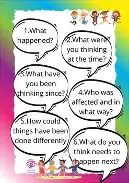
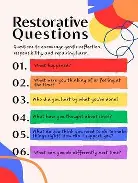
  • What happened? – Gives students a chance to share their perspective, helping build a foundation for problem-solving.
  • What were you thinking of at the time? – Encourages reflection on the behavior and helps adults understand the student’s thought process.
  • What have you thought about since? – Allows students to reflect on the situation, often triggering empathy and helping with future problem-solving.
  • Who has been affected by what you’ve done and in what way? – Helps students understand the impact of their behavior on others and fosters empathy skills.
  • What do you need to do to make things right? – Encourages students to take responsibility for their actions and develop a plan to repair relationships.
Teachers using restorative questions
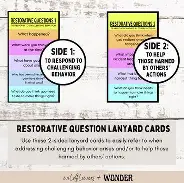
Use these questions to empower your students to solve problems and rebuild their relationships.

A Multi-tiered System of Support

Restorative chat is part of a multi-tiered system of support, which aims to address problem behavior in a supportive and proactive manner. The system includes various tiers that provide increasing levels of support based on the student’s needs.

Multi-tiered system of support
Restorative chat is part of a multi-tiered system of support, designed to address problem behavior in a supportive and proactive manner.

Conclusion

Restorative practice questions are an essential tool for teachers seeking to create supportive, inclusive learning environments. By using these questions, educators can foster empathy, understanding, and responsible behavior in their students. Remember, the goal is not punishment but restoring relationships and promoting personal growth.
Teachers fostering empathy
The goal of restorative practice is to foster empathy, understanding, and responsible behavior in our students.

Video Resources

Teachers using restorative questions in practice
Watch these videos to learn more about restorative practice and its implementation in classrooms.

Empowering Your Classroom

By incorporating restorative practice questions into your classroom, you can create a supportive learning environment that encourages empathy, understanding, and responsible behavior. Start using these questions today to make a positive impact on your students’ lives.


Teachers empowering their classrooms
Empower your classroom with restorative practice and watch the transformation unfold.


Vídeos Recomendados

Posts Similares

  • Bullying Na Escola

    Bullying na Escola: Tipos, Consequências e Prevenção Bullying na Escola: Tipos, Consequências e Prevenção O bullying escolar é um assunto grave que afeta milhões de crianças e adolescentes em todo o mundo. Esse comportamento prejudicial pode causar danos profundos e duradouros às vítimas, comprometendo seu bem-estar emocional, social e acadêmico. Neste artigo, exploraremos os diferentes…

  • Bullying E Cyberbullying Redação

    Bullying e Cyberbullying: Impacto e Prevenção Bullying e Cyberbullying: Impacto e Prevenção Bullying é um problema amplamente difundido nas escolas americanas, com mais de 16% dos alunos do ensino fundamental e médio relatando terem sido intimidados por outros estudantes durante o termo em andamento. Este comportamento intencional, hostil e repetitivo pode afetar negativamente o desenvolvimento…

  • Bullying Na Escola É Crime

    Bullying na Escola é Crime: Entenda o Bullying e Previna as Agressões Bullying na Escola é Crime: Entenda o Bullying e Previna as Agressões O que é Bullying? Bullying (inglês), também chamado de intimidação sistemática, intimidação vexatória, violência escolar e bulimento, é o uso de força física, ameaça ou coerção para abusar, intimidar ou dominar…

  • Bullying O Jogo

    Bullying in Schools: A Prevalent Issue Bullying in Schools: A Prevalent Issue Bullying is a pervasive issue in American schools, with more than 16 percent of U.S. school children reporting being bullied by other students during the current term, according to a survey funded by the National Institute of Child Health and Human Development (NICHD)….

  • How To Teach Kids About Digital Consent And Boundaries

    Teaching Kids About Digital Consent and Boundaries Teaching Kids About Digital Consent and Boundaries: A Parent’s and Educator’s Guide Introduction: The Importance of Digital Consent and Boundaries In today’s digital age, it’s essential to teach kids about digital consent and boundaries. This guide aims to provide parents, educators, and young people with the knowledge needed…

  • Brincadeira Ou Bullying

    Brincadeira ou Bullying? Brincadeira ou Bullying? Brincadeiras e jogos são atividades lúdicas que desempenham um papel fundamental no desenvolvimento de habilidades motoras, sociais e emocionais. Ao brincar, as pessoas exercem a criatividade e a imaginação para resolver tarefas propostas. Neste artigo, abordaremos alguns jogos tradicionais e modernos, bem como a diferença crucial entre uma brincadeira…

Deixe um comentário

O seu endereço de e-mail não será publicado. Campos obrigatórios são marcados com *