Bullying Vs Harassment: Key Differences Explained
Bullying vs Harassment: Key Differences Explained
As a Senior Expert in Educational Psychology and Applied Behavior Analysis (ABA), I often encounter confusion between bullying and harassment. While both terms refer to hurtful or harmful behavior, there are important distinctions in their definitions, laws, and protections for individuals experiencing harassment.
Defining Bullying and Harassment
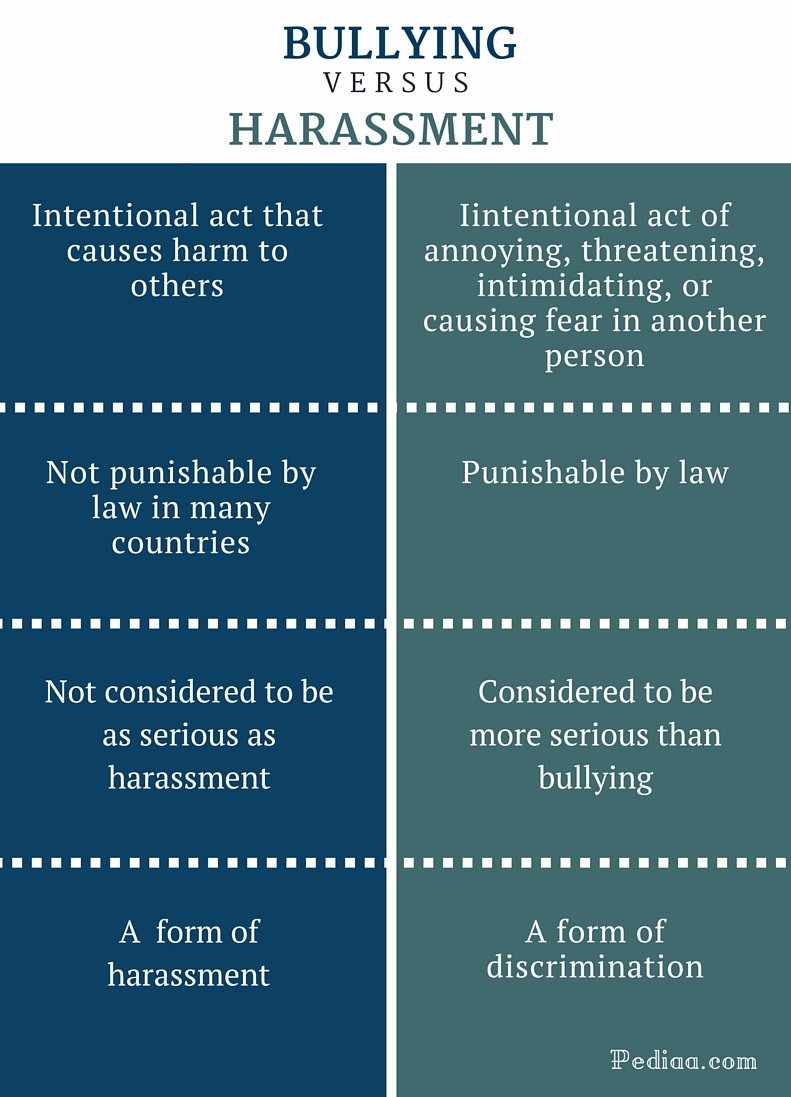
Bullying is typically defined as an act of aggressively using power to target another individual with repeated, unwanted words or actions. Those targeted are hurt either physically or emotionally and have a hard time stopping what is happening to them. In contrast, harassment outlines that the behavior is similar by its unwanted and hurtful actions, but the negative behavior is based on a person’s race, color, religion, sex, age, disability, or national origin.
Key Differences
The main difference between bullying and harassment is that when the bullying behavior directed at the target is also based on a protected class, that behavior is then defined as harassment. Protected classes include race, color, religion, sex, age, disability, and national origin.
Another key difference lies in the legal implications. Workplace harassment is illegal under Title VII of the Civil Rights Act of 1964, while workplace bullying is currently legal (or tolerated) in some states. However, more and more states are approving anti-bullying legislations.
Examples of Harassment
Harassing behaviors include anything discriminatory or offensive against one’s age, disability, religion, sexuality, gender, or race. Examples of workplace harassment include:
- Anything discriminatory or offensive against one’s age, such as firing someone because of their age.
- Anything discriminatory or offensive against one’s disability, such as refusing employment.
- Anything discriminatory or offensive against one’s religion, such as not hiring someone because the employer and candidate have different beliefs.

Conclusion
In conclusion, while bullying and harassment share some similarities, there are important differences in their definitions, laws, and protections for individuals experiencing harassment. Understanding these differences is crucial for creating a safe and respectful environment in schools and workplaces.