Restorative Practice Questions For Teachers


Restorative Practice Questions for Teachers: Empowering Restorative Conversations

Restorative Practice Questions for Teachers: Empowering Restorative Conversations

Teachers using restorative questions
Empower your students with restorative conversations.

Introduction

In today’s classrooms, it is essential to create a supportive and inclusive learning environment. One effective approach that can help achieve this goal is the use of Restorative Practice Questions (RPQ). In this article, we will explore how teachers can employ these questions in their daily interactions with students.

The Concept of Restorative Chat

Restorative chat refers to an informal, facilitated conversation between a teacher and a student. These conversations use restorative questions to address problematic behavior, focusing on building relationships, empathy, and understanding. The aim is to create a high-support, high-expectation learning environment that fosters personal growth and academic success.

Five Restorative Practice Questions for Discipline Incidents

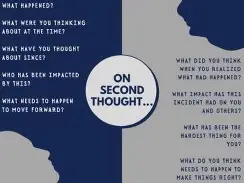
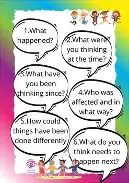
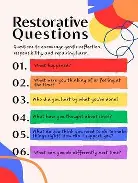
  • What happened? – Gives students a chance to share their perspective, helping build a foundation for problem-solving.
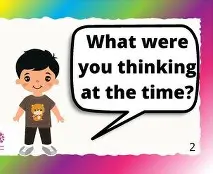
  • What were you thinking of at the time? – Encourages reflection on the behavior and helps adults understand the student’s thought process.
  • What have you thought about since? – Allows students to reflect on the situation, often triggering empathy and helping with future problem-solving.
  • Who has been affected by what you’ve done and in what way? – Helps students understand the impact of their behavior on others and fosters empathy skills.
  • What do you need to do to make things right? – Encourages students to take responsibility for their actions and develop a plan to repair relationships.
Teachers using restorative questions
Use these questions to empower your students to solve problems and rebuild their relationships.

A Multi-tiered System of Support

Restorative chat is part of a multi-tiered system of support, which aims to address problem behavior in a supportive and proactive manner. The system includes various tiers that provide increasing levels of support based on the student’s needs.

Multi-tiered system of support
Restorative chat is part of a multi-tiered system of support, designed to address problem behavior in a supportive and proactive manner.

Conclusion

Restorative practice questions are an essential tool for teachers seeking to create supportive, inclusive learning environments. By using these questions, educators can foster empathy, understanding, and responsible behavior in their students. Remember, the goal is not punishment but restoring relationships and promoting personal growth.
Teachers fostering empathy
The goal of restorative practice is to foster empathy, understanding, and responsible behavior in our students.

Video Resources

Teachers using restorative questions in practice
Watch these videos to learn more about restorative practice and its implementation in classrooms.

Empowering Your Classroom

By incorporating restorative practice questions into your classroom, you can create a supportive learning environment that encourages empathy, understanding, and responsible behavior. Start using these questions today to make a positive impact on your students’ lives.
Teachers empowering their classrooms
Empower your classroom with restorative practice and watch the transformation unfold.


Vídeos Recomendados

Posts Similares

  • Bullying Causas E Consequências

      Bullying: Causes and Consequences Bullying is a widespread problem in U.S. schools, affecting more than 16% of students, according to a survey funded by the National Institute of Child Health and Human Development (NICHD). The study, published in the Journal of the American Medical Association, found that bullying can have serious consequences for both…

  • Printable Empathy Activities For Children

    Atividades de Empatia Impressas para Crianças Atividades de Empatia Impressas para Crianças: Desenvolva habilidades sociais e promova um ambiente saudável na escola e em casa As crianças aprendem a interagir com o mundo ao seu redor desde o nascimento. Eles desenvolvem suas habilidades sociais através de interações diárias com familiares, amigos e colegas de escola….

  • Bullying Y Mobbing

    Bullying e Mobbing: Consequências, Prevenção e Ajuda Bullying e Mobbing: Consequências, Prevenção e Ajuda O bullying e o mobbing são problemas que afetam a vida de milhares de pessoas em todo o mundo. Esses comportamentos envolvem a agressão verbal, social ou física repetida contra alguém que geralmente tem menos poder ou é considerado diferente. Uma…

  • Bullying Zoey 101

    Bullying in Zoey 101: A Prevalent Issue Bullying in Zoey 101: A Prevalent Issue The popular early-2000s television show, Zoey 101, addressed various teenage issues, including bullying. The series follows the lives of students at Pacific Coast Academy (PCA), a fictional boarding school in California. Throughout its four seasons, bullying is portrayed as a recurring…

  • Bullying Lei 2024

    Bullying and Cyberbullying Law in the US Bullying and Cyberbullying Law in the US: A New Era of Protection for Children In 2024, a new law was enacted to criminalize bullying and cyberbullying behaviors. This law, known as Lei 14.811 de 2024, aims to put an end to systematic and consistent intimidation, which often affects…

  • Bullying What Is It

    Bullying: What Is It? Bullying: What Is It? Bullying is a behavior that hurts, harms, or humiliates a person. There are different types of bullying. Active bullying, which includes physical bullying, and verbal bullying, such as name calling. Passive bullying, when a person makes the other feel invisible, by ignoring them or not inviting them…

Deixe um comentário

O seu endereço de e-mail não será publicado. Campos obrigatórios são marcados com *