
The Secret To Understanding Your Child’S Mindset Revealed
The Secret to Understanding Your Child’s Mindset Revealed
Children operate primarily through an emotional lens rather than a logical one, often rendering their behavior enigmatic to adults. This psychological orientation is not a lack of intelligence but a reflection of their current developmental stage. By shifting our perspective to prioritize emotional experience, we can decode the underlying drivers of their actions.
The disconnect between adult reasoning and childhood reactions stems from the prefrontal cortex’s ongoing maturation. While adults rely on executive functions to regulate responses, children are frequently governed by immediate affective states. Recognizing this gap is the first step toward effective behavioral support.
Understanding this internal framework allows caregivers to move from frustration to empathy. When we view a child’s “misbehavior” as a communication of an unmet need, we transform the interaction from a power struggle into a teaching moment. This shift is essential for fostering long-term psychological resilience.
[GALERIA_VIDEOS]
The Primacy of Emotional Connection
At the core of a child’s psychological needs is the drive for connection, a concept rooted in attachment theory. This bond is maintained through attunement, where the caregiver accurately interprets and responds to the child’s emotional state. When a child feels seen and understood, they develop a secure base from which to explore the world.
To implement this, parents should utilize “Active Mirroring.” This involves reflecting the child’s emotion back to them—for example, saying, “I can see that you are feeling very frustrated that the tower fell”—before attempting to solve the problem. This validates their experience and reduces the emotional intensity of the situation.
Navigating Power Dynamics and Helplessness
Because children exist in a world governed by adults, they often experience a profound sense of helplessness. This feeling of being “small” can manifest as an aggressive drive for control or an attempt to project their fear onto others. In the context of Applied Behavior Analysis (ABA), these are often seen as functions of escape or tangible gain.
A concrete solution is the use of a Functional Assessment approach to identify the trigger of the power struggle. Once the trigger is known, caregivers can offer “Limited Choices” (e.g., “Do you want to brush your teeth before or after we put on pajamas?”). This grants the child a sense of agency and autonomy, reducing the need for oppositional behavior.
Addressing Cognitive Rigidity and Generalizations
Young minds frequently perceive the world in binary, black-and-white terms, leading to sweeping generalizations. For children with Autism Spectrum Disorder (ASD), particularly those requiring Level 1 or Level 2 support, this cognitive rigidity can be more pronounced, making transitions or changes in routine distressing.
To mitigate this, educators and parents should employ Social Scripts. These are short, rehearsed dialogues that provide a roadmap for social interactions or unexpected changes. By practicing these scripts in a safe environment, the child learns to navigate the “gray areas” of social dynamics, reducing anxiety and the risk of social isolation.
The Architecture of Intelligence: Process vs. Talent
A critical component of a child’s psychological development is the distinction between a fixed and a growth mindset. Praising innate intelligence (e.g., “You are so smart”) can inadvertently create a fear of failure, as the child begins to view effort as a sign of low ability. This often leads to a plateau in achievement when tasks become challenging.
The evidence-based alternative is “Process-Oriented Praise.” Instead of praising the result or the trait, focus on the strategy and effort: “I noticed how you tried three different ways to solve that math problem before you found the answer.” This encourages a growth mindset, where challenges are viewed as opportunities for brain development rather than threats to the ego.
Integrating Support within the School Ecosystem
The transition from home to the classroom requires a cohesive school ecosystem to prevent bullying and support mental health. When a child’s emotional needs are not met or their cognitive rigidity is misunderstood, they may become targets for peer aggression or struggle with socio-emotional coaching.
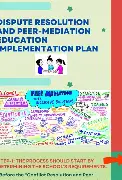
A highly effective strategy is the implementation of peer-mediated intervention. By training a small group of empathetic peers to support a student with social challenges, the school creates a natural support system. This reduces the reliance on adult intervention and fosters genuine social integration through guided, positive peer interactions.
FAQ
Why does my child react emotionally even when the situation is simple?
This occurs because the emotional centers of the brain develop faster than the logical centers. They are not choosing to be “difficult”; they are simply lacking the neurological maturity to regulate their affective responses.
How can I tell the difference between a tantrum and a sensory meltdown?
A tantrum is typically goal-directed (seeking a specific outcome), whereas a meltdown is a physiological response to sensory overload or emotional exhaustion. Meltdowns require a reduction in stimuli and a safe space, rather than behavioral redirection.
Is it ever okay to praise a child’s natural talent?
While acknowledging talent is not harmful, it should always be paired with the effort that sustains that talent. The goal is to ensure the child values the work and the process more than the label of being “gifted.”